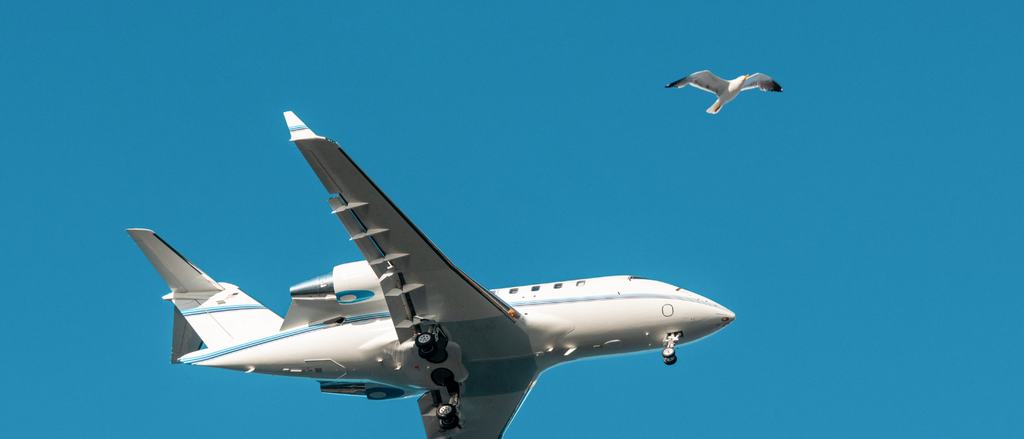
What happens when a plane hits a bird?
Thursday, October 29, 2026
A bird strike is a common occurrence at airports around the world. Most passengers never notice. But when a bird is sucked into an engine or collides with a cockpit window, the crew has a serious decision to make, and your journey could be cut short. Here is what actually happens during a bird strike, and what it means for your rights as a passenger.
What is a bird strike?
A bird strike is a collision between a bird and an aircraft. It can happen at any stage of flight, but the vast majority occur at low altitude, during takeoff or landing, when planes are moving more slowly and birds are most active.
In 2025 alone, the CAA reports 1702 confirmed bird strikes in the UK. In the US, the Federal Aviation Administration recorded over 19,600 wildlife strikes in 2023. Globally, the number runs into the tens of thousands each year.
How dangerous is a bird strike?
For passengers, bird strikes are rarely life-threatening. Around 95% cause no structural damage to the aircraft.
Jet engines are built to withstand significant impact. Large commercial engines must pass certification tests proving they can absorb a bird weighing over 3.5kg without shedding dangerous debris. Most survive a bird ingestion with only minor blade damage.
Cockpit windows are another common point of impact. They are constructed from several layers of laminated glass and acrylic, strong enough to handle hailstones inside a thunderstorm. In most cases, a bird strike does not compromise them.
The most widely known exception is the 2009 incident now called the "Miracle on the Hudson." US Airways Flight 1549 struck a flock of Canada geese on takeoff from LaGuardia Airport. Both engines lost power. The crew made an emergency water landing on the Hudson River, and all 155 people on board survived.
Fatal accidents caused solely by bird strikes are rare. Between 1988 and 2023, 76 people in the US died in accidents involving wildlife strikes, a significant number, but small relative to the tens of thousands of incidents recorded annually.
What happens after a plane hits a bird?
Even when a bird strike causes no visible damage, the procedures that follow are significant.
As a precaution, every aircraft that experiences a bird strike must return to the nearest airport for a full inspection. Engineers check for what is known as barely visible impact damage, small cracks or deformations that could become dangerous if left undetected.
This is standard practice, not necessarily a sign of serious damage. But the impact on passengers is real: flights are delayed or cancelled, passengers are rebooked, and the crew may be stood down. The knock-on effect across an airline's schedule can last for hours.
Are you entitled to compensation for a bird strike delay?
This is where many passengers are surprised.
Bird strikes are generally classified as extraordinary circumstances under EU261. That means the disruption is treated as something outside the airline's reasonable control. As a result, if your flight was delayed or cancelled because a plane hit a bird, you are generally not entitled to financial compensation.
This does not mean you have no rights at all. Even under extraordinary circumstances, airlines are still legally required to provide care and assistance while you wait. Depending on the length of your delay, this can include:
- Meals and refreshments
- Hotel accommodation if an overnight stay is necessary
- Transport between the airport and your hotel
- Two free means of communication (phone calls, emails)
If the airline fails to provide these, keep records of any reasonable out-of-pocket expenses you incur. You can get these compensated afterwards.
When might you still have a claim?
Not every disrupted flight is as straightforward as it first appears.
A bird strike may be cited as the cause of a delay, but the actual disruption can sometimes involve other contributing factors, such as aircraft availability, crew scheduling, or the way the airline managed the aftermath. In those cases, whether extraordinary circumstances truly apply is less clear.
If your flight was delayed or cancelled and you are not certain why, it is worth checking your eligibility. Many passengers may be entitled to up to €600 under EU261 and never pursue it because they assumed the airline was not at fault.
Frequently asked questions
What is a bird strike on a plane?
A bird strike is a collision between a bird and an aircraft in flight. It is most common during takeoff and landing, when aircraft are flying low and birds are most active near airports.
Can a bird bring down a plane?
It is extremely rare. Around 95% of bird strikes cause no damage to the aircraft. Engines are certified to withstand bird impacts, and pilots are trained to handle the situation. Fatal accidents caused solely by bird strikes are uncommon in commercial aviation.
Do I get compensation if my flight was delayed by a bird strike?
Generally, no. Bird strikes are considered extraordinary circumstances under EU261, which means airlines are not required to pay financial compensation. However, you remain entitled to care and assistance, including meals, hotel accommodation where needed, and rebooking onto the next available flight.
What should I do if my flight is disrupted by a bird strike?
Keep any receipts for reasonable expenses such as food or accommodation. Make a note of the reason for the disruption as communicated by the airline. And if you are unsure whether your situation qualifies for compensation, check your eligibility with AirRefund.com/en.
If your flight was delayed or cancelled and you want to know where you stand, AirRefund.com/en can assess your claim quickly and at no upfront cost. Check your eligibility today - no win, no fee.
Sources:
- https://www.caa.co.uk/data-and-analysis/safety-and-security/birdstrike-data
- https://www.faa.gov/airports/airport_safety/wildlife
This content was written with AI assistance and reviewed for accuracy by a member of our air passenger rights team before publication.



Did you like this content ?
Thanks you made our day!
Help us be better!
Well received, thanks!