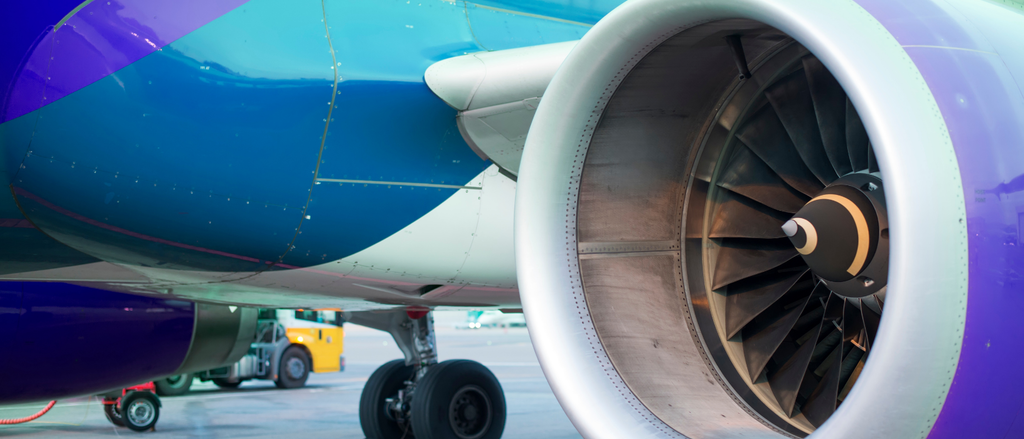
Can planes fly with one engine?
Wednesday, September 16, 2026
A plane engine shutting down mid-flight sounds frightening. The reality is more reassuring. Modern commercial aircraft are engineered to fly safely on a single engine, and pilots train for exactly this scenario in flight simulators throughout their careers. The short answer is yes. A twin-engine plane can fly, take off, and land with just one engine running. Regulators require it. Here is what actually happens when an engine fails — and what it could mean for your rights as a passenger.
If your flight was delayed or diverted due to engine trouble, check your eligibility with AirRefund.com/en to find out if you are entitled to compensation.
How twin-engine planes are certified for single-engine flight
Commercial aircraft are not just capable of flying on one engine — they are legally required to be. Aviation safety regulators mandate that any aircraft departing with passengers must be able to complete its journey on a single engine, based on the loads determined before takeoff.
This requirement is built into aircraft certification. Twin-engine jets like the Boeing 737, Airbus A320, and Boeing 777 are all designed so that losing one engine does not make the aircraft uncontrollable. The remaining engine provides enough thrust to maintain flight, navigate safely, and land.
Losing an engine does reduce available thrust. The aircraft cannot maintain its normal cruising altitude and will descend to a lower altitude where the single engine can sustain level flight. From there, the crew will either continue to the destination or divert to the nearest suitable airport.
Can a plane take off with one engine?
Yes, in most cases. Commercial aircraft are certified to complete a take-off even if an engine fails at a critical point on the runway. Pilots refer to this as the V1 speed: the point beyond which a take-off must continue rather than be aborted. Once V1 is reached, the aircraft is committed to taking off, even on one engine.
Before every flight, pilots calculate this speed based on aircraft weight, runway length, temperature, and weather conditions. It is a precise calculation, not an estimate, and it ensures the aircraft can climb safely even if the worst happens at the worst possible moment.
What do pilots do when an engine fails?
Pilots follow a structured procedure using the Quick Reference Handbook, a step-by-step guide covering every potential emergency scenario. The process is methodical:
- Identify which engine has failed and why
- Stabilise the aircraft using the rudder, to counteract the uneven thrust
- Work through the checklist, which may include shutting down the failed engine to prevent further damage
- Declare a Mayday or PAN call to alert air traffic control and receive priority handling
- Divert to the nearest suitable airport if required
Air traffic controllers clear the airspace, give the aircraft priority in the landing queue, and ensure emergency services are standing by on the runway. It is a well-rehearsed system, and it works.
How often do plane engines actually fail?
Engine failures are rare. The reported failure rate is approximately 1 per 200,000 operating hours, roughly equivalent to one failure every 22 years of continuous, uninterrupted operation. Modern jet engines go through rigorous maintenance cycles, with multiple layers of inspection before and after every flight.
In 2001, Air Transat Flight 236 ran out of fuel over the Atlantic due to a fuel leak and glided for around 120 kilometres before landing safely in the Azores. It remains the longest unpowered flight by a commercial aircraft. Exceptional as it was, it demonstrated just how capable modern aircraft are at surviving scenarios that should, by every instinct, be unsurvivable.
ETOPS: how twin-engine planes cross oceans safely
ETOPS stands for Extended-range Twin-engine Operational Performance Standards. This is the certification that allows twin-engine commercial aircraft to operate long over-water routes, such as transatlantic or transpacific flights.
ETOPS rules specify the maximum time a twin-engine aircraft can be from a diversion airport at any point during the route. An ETOPS-180 rating means the aircraft is never more than 180 minutes from a suitable airport on one engine. It is a tightly regulated framework that makes long-haul twin-engine flying as safe as flying on four engines.
If your flight was delayed because of engine trouble, you may be entitled to compensation
Engine problems are one of the more common causes of significant flight delays and diversions. If your flight arrived at its final destination more than 3 hours late, EU261 may entitle you to financial compensation of up to €600 per person, depending on the flight distance.
Importantly, not every engine problem qualifies as an "extraordinary circumstance." A technical fault that stems from a maintenance issue is generally considered the airline's responsibility, not an unforeseeable event beyond their control. This distinction matters. Airlines frequently cite technical issues to avoid paying compensation, but the cause of the problem determines whether their exemption is legitimate.
AirRefund.com/en can assess your specific situation, review the flight records, and handle the claim on your behalf — on a no win, no fee basis.
Start your claim with AirRefund.com/en to find out if your delayed or diverted flight qualifies.
Frequently asked questions
Can a plane fly with one engine?
Yes. Twin-engine commercial aircraft are designed and certified to fly safely on a single engine. By regulation, they must be capable of completing a journey on one engine, based on the conditions at departure. Pilots also train for this scenario throughout their careers.
What happens when a plane loses an engine mid-flight?
Pilots work through a structured emergency checklist, stabilise the aircraft using the rudder, and typically declare a Mayday or PAN call to receive priority from air traffic control. The aircraft then lands at the nearest suitable airport or continues to its destination if safe to do so.
How rare is an engine failure on a commercial flight?
Engine failures are reported at approximately 1 per 200,000 operating hours, equivalent to roughly once every 22 years of continuous operation. They are uncommon, but the aviation system and the pilots who operate it are built and trained to handle them safely.
Can I claim compensation if my flight was delayed due to engine failure?
Possibly. Under EU261, if your flight arrived more than 3 hours late, you may be entitled to financial compensation. Whether the engine failure is treated as an extraordinary circumstance depends on its cause. AirRefund.com/en can assess your claim and advise on your eligibility.
What is ETOPS and why does it matter?
ETOPS stands for Extended-range Twin-engine Operational Performance Standards. It is the certification that permits twin-engine aircraft to fly long over-water routes, based on how close the aircraft remains to a diversion airport throughout the flight. It makes transatlantic twin-engine travel as safe and well-regulated as any other route.
This content was written with AI assistance and reviewed for accuracy by a member of our air passenger rights team before publication.



Did you like this content ?
Thanks you made our day!
Help us be better!
Well received, thanks!