Plane Facts: How fast do planes fly?
Friday, May 8, 2026
Ever gazed out an airplane window and wondered just how fast you're traveling through the sky? Read on and find out.
How fast do commercial planes fly?
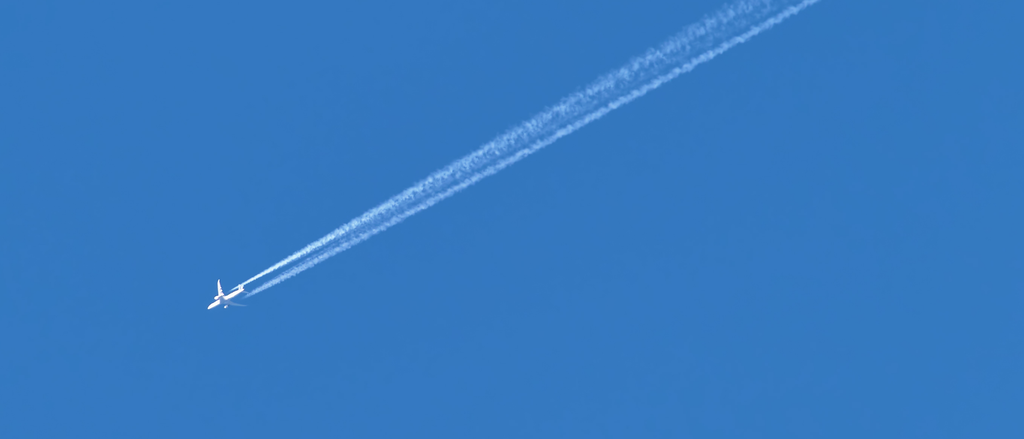
Most commercial aircraft cruise at speeds between 500-600 mph (800-965 km/h), which translates to roughly Mach 0.78-0.85 at typical cruising altitudes. To put this in perspective, you're traveling nearly 10 times faster than highway speed limits.
Here's how different aircraft compare:
- Boeing 737: 530 mph (853 km/h) typical cruising speed
- Airbus A320: 545 mph (877 km/h) average cruise
- Boeing 777: 590 mph (950 km/h) long-haul cruising
- Airbus A380: 560 mph (900 km/h) despite its massive size
These speeds make air travel remarkably efficient—a journey that would take 10 hours by car can often be completed in just 1-2 hours by plane.
What affects airplane speed during your flight?
Several factors influence how fast your plane actually travels, explaining why flight times can vary even on the same route.
Altitude
Altitude plays a crucial role. Commercial aircraft typically cruise at 30,000-40,000 feet where the thinner air creates less resistance, allowing for optimal speeds and fuel efficiency.
Weather conditions
Weather conditions significantly impact speed. Tailwinds can boost your ground speed by 50-100 mph, while headwinds can slow you down considerably. Pilots often adjust altitude to find favorable wind conditions.
Aircraft weight
Aircraft weight affects performance. A fully loaded plane with passengers, cargo, and fuel will accelerate more slowly during takeoff and may cruise slightly slower than a lighter aircraft.
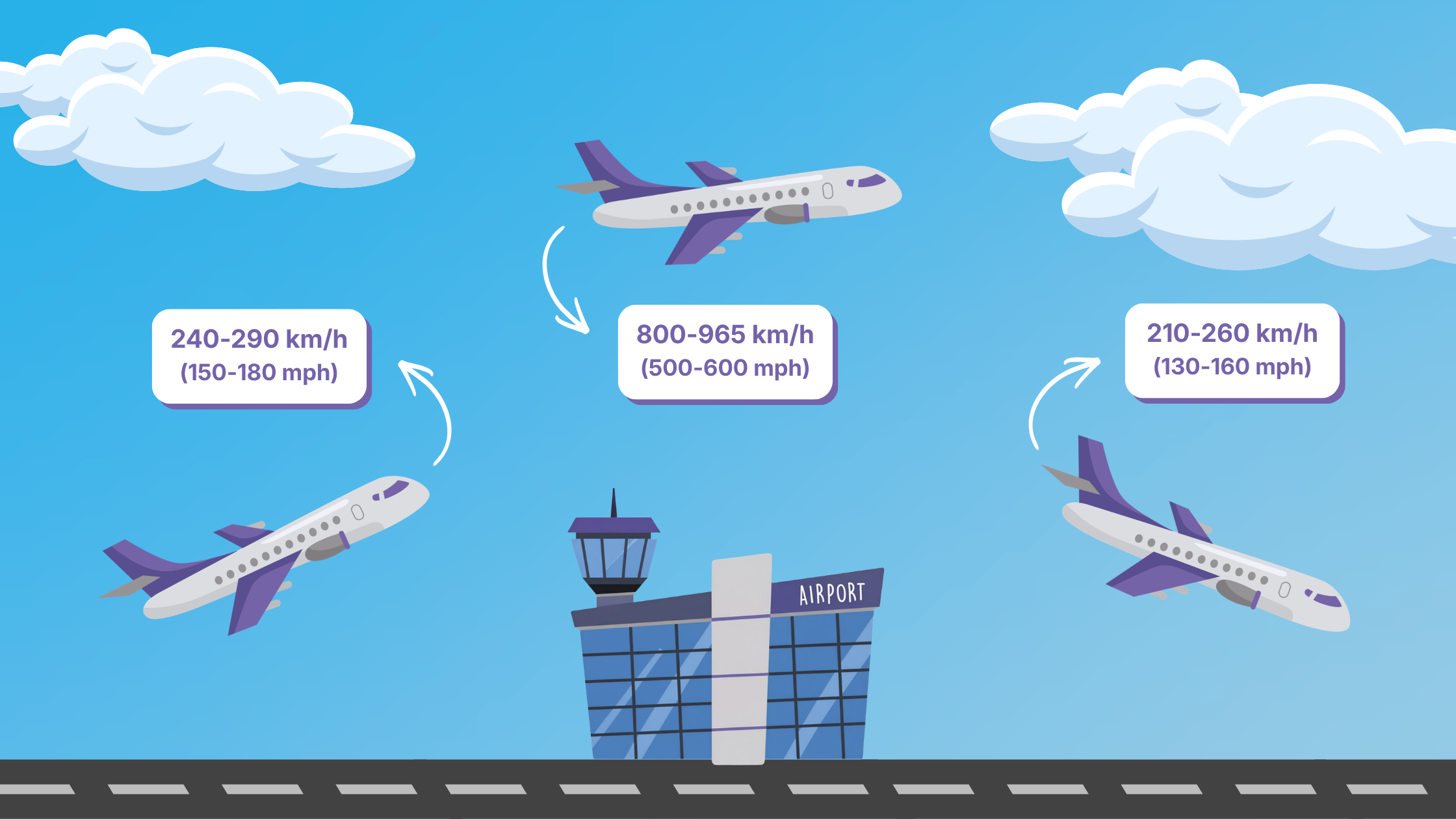
Flight phases involve different speeds:
- Takeoff: 150-180 mph (240-290 km/h)
- Climb: Gradually increasing to cruise speed
- Cruise: 500-600 mph (800-965 km/h)
- Descent and landing: Reducing to 130-160 mph (210-260 km/h)
Do different airlines fly at different speeds?
While aircraft models determine maximum capabilities, airlines make operational decisions that can affect your travel time.
- Aircraft selection matters. Airlines operating newer, more efficient aircraft like the Boeing 787 or Airbus A350 may achieve slightly higher cruising speeds while using less fuel.
- Route optimization influences speed. Airlines work with air traffic control to find the most efficient flight paths, sometimes trading slightly longer distances for better wind conditions or less congested airspace.
- Fuel efficiency considerations often take priority over maximum speed. Airlines may choose to fly at slightly reduced speeds to save fuel costs, especially on longer routes where small efficiency gains compound significantly.
How does flight speed affect your travel time?
Speed calculations seem straightforward—a 1,000-mile flight at 500 mph should take 2 hours. However, real-world factors add complexity.
Ground operations consume significant time. Taxiing, takeoff procedures, and landing approaches can add 30-45 minutes to your total travel time, regardless of cruising speed.
Air traffic control may require speed adjustments during busy periods, particularly around major airports. Your pilot might need to reduce speed or take longer routes to maintain safe separation from other aircraft.
Real-world examples:
- New York to Los Angeles: 2,400 miles typically takes 5.5-6 hours
- London to Paris: 215 miles usually requires 1.5 hours including takeoff/landing
- Short regional flights often spend more time climbing and descending than at cruise speed
Frequently asked questions
How fast do planes fly compared to cars?
Commercial aircraft cruise at 500-600 mph, roughly 8-10 times faster than typical highway speeds of 60-70 mph.
Why don't planes fly faster?
Current speeds represent an optimal balance between fuel efficiency, passenger comfort, and aircraft design limitations. Flying significantly faster would require much more fuel.
Do larger planes fly faster than smaller ones?
Not necessarily. While some large aircraft like the Boeing 777 cruise faster than regional jets, size doesn't directly correlate with speed. Design and purpose matter more.
How fast do private jets fly?
Many private jets cruise at similar speeds to commercial aircraft (450-550 mph), though some high-performance models can exceed 600 mph.
Can weather make flights significantly slower?
Yes, strong headwinds can reduce ground speed by 100+ mph, potentially adding 30-60 minutes to cross-country flights.
How to get compensation for your delayed or cancelled flight?
If you've experienced sa flight delay of at least 3 hours or a last minute cancellation, you may be entitled to compensation under passenger protection regulations. Claiming is simple. Check your flight with AirRefund.com/en, and if you're eligible – file a claim. Their experts will carefully analyze your flight and your circumstances, and take care of all the paperwork for you. They work on a "no win, no fee" basis, which means that you only pay if they secure your compensation.



Did you like this content ?
Thanks you made our day!
Help us be better!
Well received, thanks!