Plane Facts: How high do planes fly?
Wednesday, May 13, 2026
Do you ever see a plane in the sky and start wondering, how far above the ground it's flying? You're not alone. Read on to learn all about flight altitude, how it's chosen, and how it can affect your journey.
What altitude do commercial planes fly at?
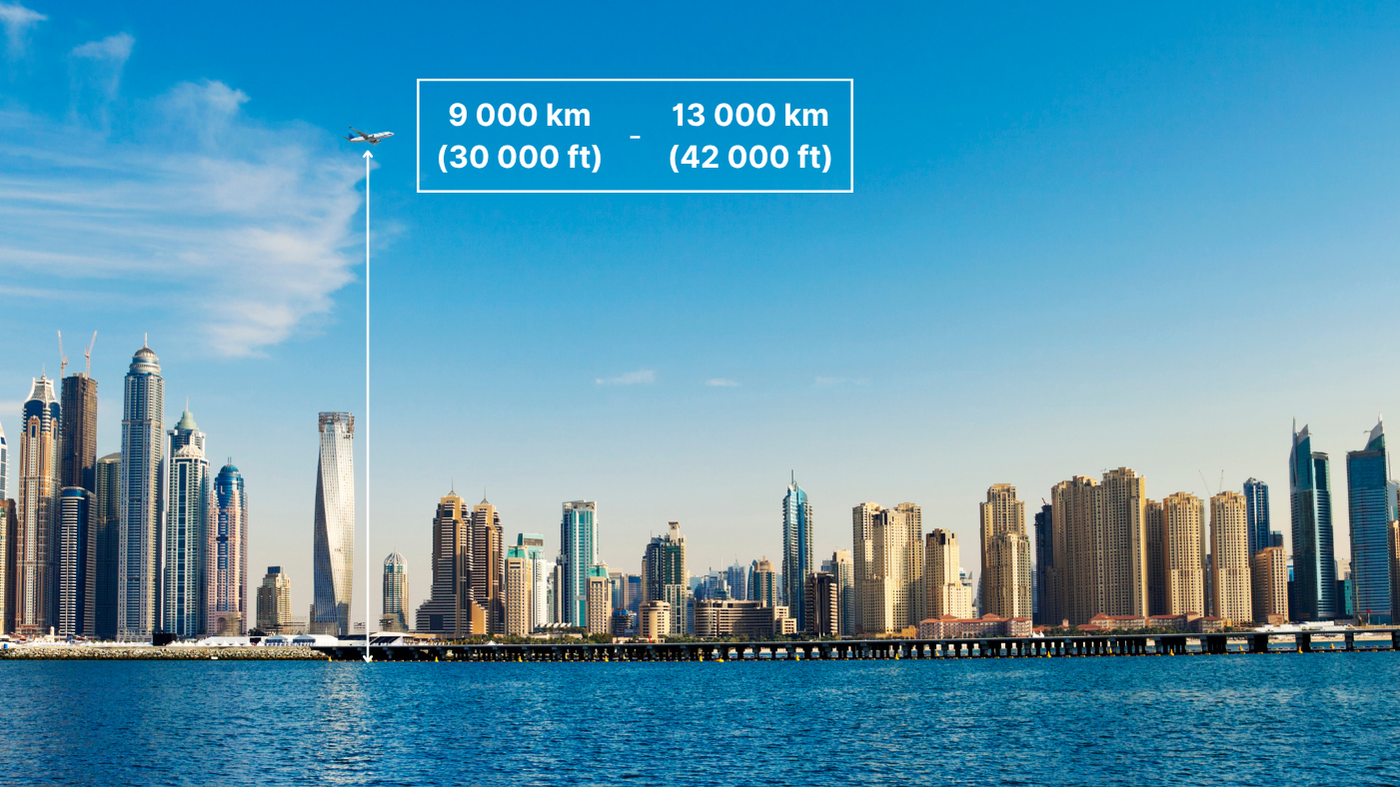
Commercial aircraft typically cruise between 30,000 and 42,000 feet above sea level. Most passenger flights operate in the 35,000 to 40,000 feet range, which aviation professionals call the "flight levels."
This altitude range isn't arbitrary – it's carefully chosen for several reasons:
- Optimal fuel efficiency: Thinner air at high altitudes reduces drag
- Weather avoidance: Flying above most turbulent weather systems
- Safety margins: Sufficient altitude for emergency procedures
- Air traffic management: Organized flight level separation
Popular aircraft like the Boeing 737 and Airbus A320 commonly cruise at 36,000-38,000 feet, while larger aircraft such as the Boeing 777 can operate efficiently up to 42,000 feet.
Why do planes fly at high altitudes?
Airlines choose high cruising altitudes for compelling operational reasons that directly benefit passengers:
Fuel efficiency: At 35,000+ feet, air density is roughly 25% of sea level density. This dramatic reduction in air resistance allows engines to operate more efficiently, reducing fuel consumption and keeping ticket prices lower.
Weather avoidance: Most turbulent weather, including thunderstorms and severe wind patterns, occurs below 30,000 feet. Flying above these systems provides smoother flights and reduces weather-related delays.
Jet stream utilization: Airlines strategically use high-altitude jet streams—fast-moving air currents at 30,000-40,000 feet—to reduce flight times on eastbound routes and avoid headwinds when flying west.
How high do different types of aircraft fly?
Different aircraft types operate at varying altitudes based on their design and purpose:
- Commercial airlines: 30,000-42,000 feet (standard passenger service)
- Private jets: 35,000-45,000 feet (often higher than commercial traffic)
- Regional aircraft: 25,000-35,000 feet (smaller planes with lower service ceilings)
- General aviation: 3,000-15,000 feet (small private planes and helicopters)
Business jets often fly higher than commercial aircraft, sometimes reaching 45,000 feet, allowing them to avoid commercial traffic and access more direct routing.
What happens to passengers at high altitudes?
At cruising altitude, the outside air pressure is too low to sustain human life. Aircraft solve this through sophisticated cabin pressurization systems that maintain a comfortable environment equivalent to 6,000-8,000 feet elevation.
Key safety measures include:
- Pressurized cabin: Maintains breathable atmosphere throughout flight
- Oxygen systems: Emergency masks deploy if cabin pressure drops
- Gradual pressure changes: Controlled ascent and descent rates
- Temperature control: Heating systems counter frigid outside temperatures (-40°F to -70°F)
These systems ensure passenger comfort and safety throughout the journey, making high-altitude flight as routine as ground-level travel.
Can flight altitude affect your travel experience?
Flight altitude decisions directly impact your travel experience in several ways:
Smoother flights: Higher altitudes typically mean less turbulence, as most weather disturbances occur at lower levels. This translates to more comfortable journeys with fewer bumpy moments.
Optimized flight times: Pilots adjust altitude to catch favorable winds or avoid headwinds, potentially reducing flight duration and improving on-time performance.
Weather-related delays: When severe weather prevents aircraft from reaching optimal altitudes, flights may experience delays or require longer routes, affecting arrival times.
Frequently asked questions
Do all flights fly at the same altitude?
No. Air traffic control assigns specific altitudes based on flight direction, aircraft type, and traffic separation requirements. Eastbound flights typically use odd-numbered flight levels (35,000, 37,000 feet), while westbound flights use even numbers.
Can passengers feel the altitude change?
Most passengers notice ear pressure changes during climb and descent but shouldn't feel discomfort at cruising altitude due to cabin pressurization systems.
What's the highest a commercial plane can fly?
Most commercial aircraft have service ceilings around 42,000-45,000 feet, though they rarely operate at maximum altitude during regular passenger service.
Why do some flights feel bumpier than others at the same altitude?
Atmospheric conditions vary by location, season, and weather patterns. Even at optimal cruising altitudes, flights can encounter clear air turbulence or jet stream boundaries.
Did you know that in case of a flight delay or cancellation...
You could be entitled to up to €250, €400 or €600 in flight compensation! If your flight was delayed more than 3 hours or cancelled last minute, check if you're eligible for compensation under the EU261 regulation using the button below. It will only take 2 minutes, and our experts will analyze your claim and inform you about your possible compensation!



Did you like this content ?
Thanks you made our day!
Help us be better!
Well received, thanks!