Plane Facts: How do planes fly
Wednesday, May 27, 2026
Flying may feel almost improbable when you’re cruising above the clouds, but the science behind it is surprisingly logical. Modern aircraft rely on a delicate balance of forces and aerodynamic design to lift hundreds of passengers safely into the air.
What makes planes stay in the air?
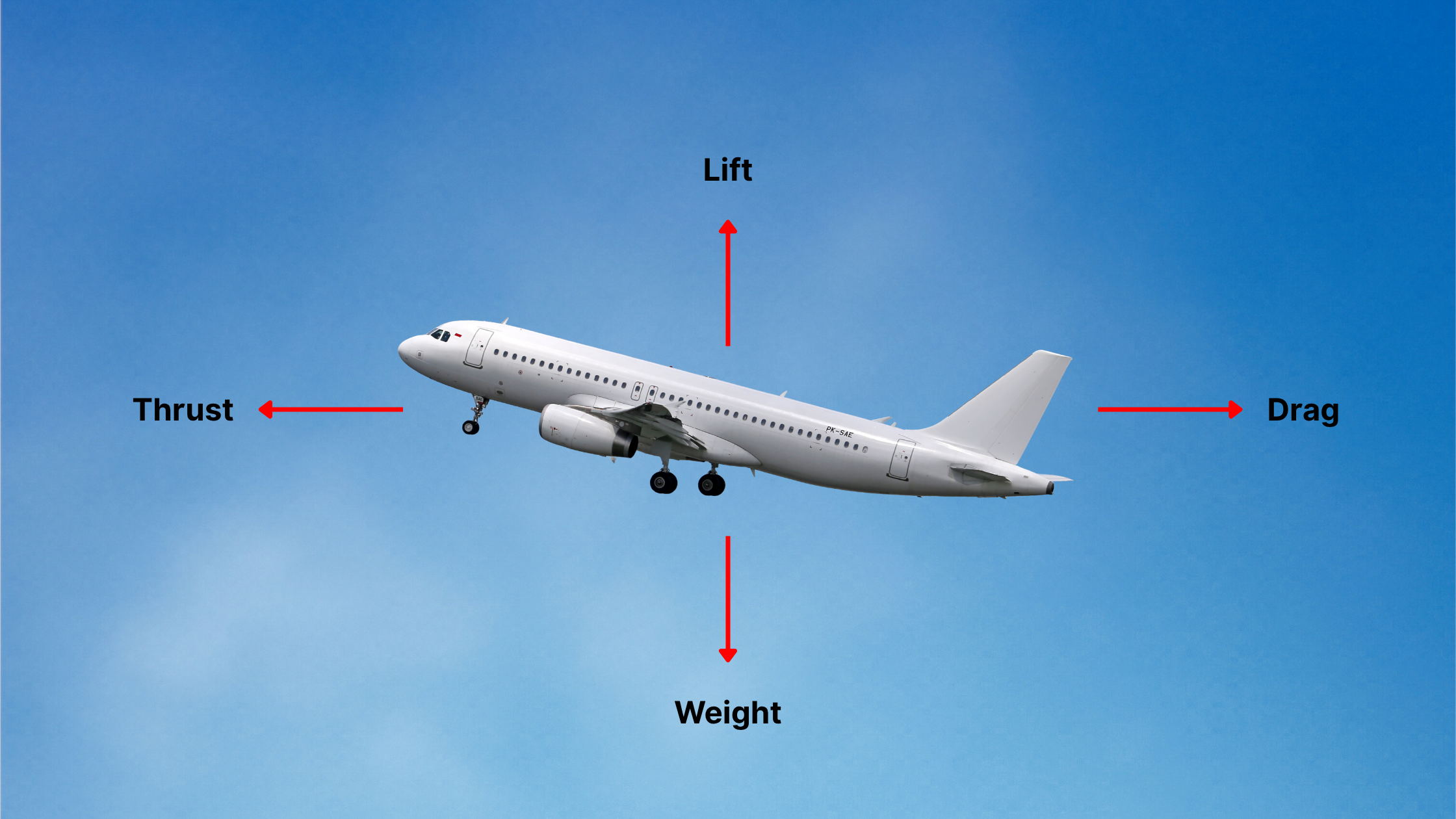
Aircraft remain airborne through a delicate balance of four fundamental forces working together: lift, weight, thrust, and drag.
- Lift is the upward force generated primarily by the wings, counteracting the aircraft's weight pulling it toward Earth.
- Thrust, produced by engines, propels the plane forward and overcomes drag – the air resistance that opposes motion.
Think of it as a continuous tug-of-war: lift versus weight, thrust versus drag. When lift exceeds weight and thrust overcomes drag, the plane climbs. When these forces balance perfectly, you experience smooth, level flight.
Contrary to popular belief, engines don't "hold up" the airplane – that's the wings' job. Engines provide forward motion, which enables the wings to generate the lift that keeps you airborne.
How do airplane wings create lift?
The secret lies in the wing's airfoil shape – curved on top, flatter underneath. As air flows over this specially designed surface, it creates different pressure zones.
Air moving over the curved upper surface travels faster than air flowing beneath the wing. This speed difference creates lower pressure above the wing and higher pressure below, generating an upward force – lift.
Newton's third law also plays a crucial role: as wings deflect air downward, the air pushes back upward on the wing with equal force. This downwash effect contributes significantly to lift generation.
Many people mistakenly believe air molecules that split at the wing's front edge must reunite at the back simultaneously. This "equal transit time" theory is actually incorrect – the upper airflow reaches the wing's trailing edge much faster.
Why don't planes fall out of the sky?
Aircraft are engineered with multiple safety systems and redundancies. Continuous lift generation occurs as long as air flows over the wings at sufficient speed and angle.
Modern aircraft can glide considerable distances even with complete engine failure. Commercial jets typically maintain a glide ratio of about 15:1, meaning they can travel 15 miles forward for every mile of altitude lost.
Pilots undergo extensive training to handle various scenarios, from severe weather to mechanical issues. Air traffic control systems maintain safe separation between aircraft, while sophisticated navigation equipment ensures precise flight paths.
Regular maintenance schedules, strict certification requirements, and advanced weather radar systems all contribute to aviation's exceptional safety record.
What happens during takeoff and landing?
Takeoff requires achieving sufficient airspeed for the wings to generate enough lift to overcome the aircraft's weight. Pilots adjust wing flaps and slats to increase lift at lower speeds, allowing shorter takeoff distances.
During landing, pilots gradually reduce thrust while maintaining controlled descent. Wing flaps extend further to maintain lift at slower approach speeds, while spoilers help reduce lift and increase drag after touchdown.
These critical flight phases involve the most dramatic changes in the four forces of flight, which explains why you feel pressed into your seat during takeoff or experience that "dropping" sensation during descent.
How do pilots control the plane?
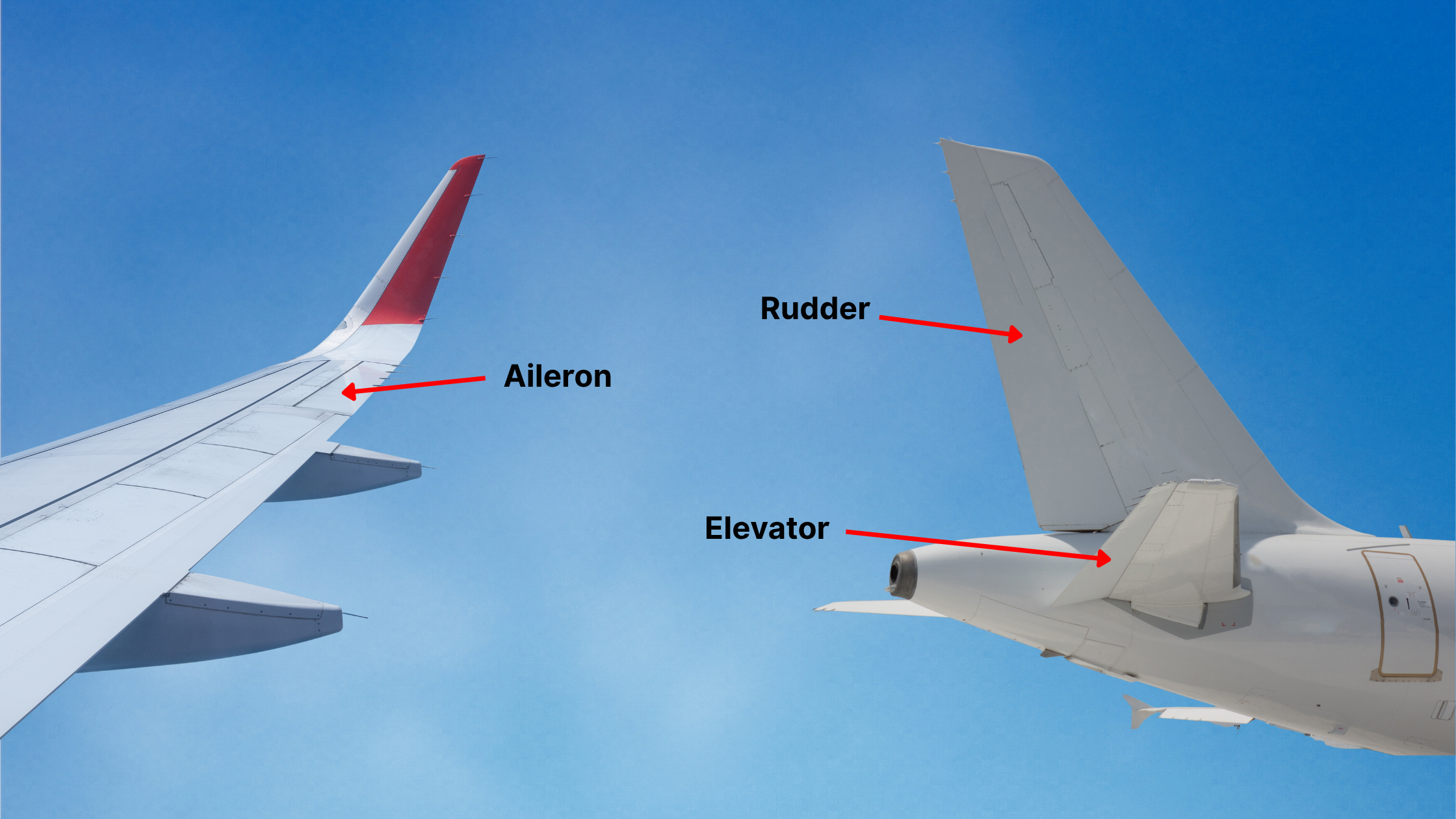
Pilots manipulate flight controls to adjust the aircraft's attitude and direction. Ailerons on the wings control roll movement, while the rudder on the tail manages yaw (left-right turning). Elevators on the horizontal tail surface control pitch (nose up or down).
Modern aircraft use fly-by-wire systems where computer assistance helps pilots maintain optimal flight characteristics. These systems prevent dangerous flight attitudes and automatically adjust control inputs for smoother, safer flight.
Weather conditions significantly impact flight operations. Pilots receive continuous updates about wind patterns, turbulence, and storm systems, adjusting routes and altitudes accordingly for passenger comfort and safety.
Frequently asked questions
Can planes fly if one engine fails?
Yes, commercial aircraft are designed to fly safely on one engine. Twin-engine planes can maintain altitude and reach the nearest suitable airport using a single engine.
Why do planes sometimes feel like they're dropping?
Turbulence causes temporary changes in lift, creating that "dropping" sensation. The aircraft remains fully controlled and safe during these normal atmospheric disturbances.
How fast do planes need to go to take off?
Takeoff speeds vary by aircraft size and weight, typically ranging from 150-180 mph for commercial jets. Smaller aircraft require lower speeds, around 60-80 mph. Check out our blog about flight speed to learn more.
Do planes fly differently in bad weather?
Pilots adjust altitude, speed, and route to avoid severe weather. Modern radar systems help navigate around storms, while aircraft are designed to handle lightning strikes safely.
How does claiming flight compensation work?
If your flight was delayed by at least 3 hours upon arrival, or cancelled less than 14 days prior to planned departure, the EU 261 regulation protects your right to up to €250, €400 or €600 euro in compensation. The amount you might be owed depends on the type of disruption and the distance of your flight.
If you've experienced a disruption like this, you can claim easily with AirRefund. We make it simple - you check your flight using the button below and if you're eligible, file a claim. Our experts will immediately start working on your case and reach out to you with more information. If the airline doesn't want to pay out the compensation that you're owed, our legal team will even fight for your case in court. And the best thing is, it's "no win, no fee" - you only pay if we successfuly secure your compensation. So no risk for you!



Did you like this content ?
Thanks you made our day!
Help us be better!
Well received, thanks!